Showing posts with label Porsche. Show all posts

Tuesday, June 1, 2010

SMMT Test Day 2010 highlights


I can’t quite convey the sound involved, but there came a point last Thursday when any attempt at subjective analysis faded into deranged muttering. It came as the result of a sustained blast of full throttle in something which had more power than my first five cars put together. Fortunately the part of my brain devoted to things like driving continued to function, but whichever lobe or cortex it is that controls speech had temporarily turned to mush. "Jhessssus...  it's... oh my... erm..."

It wasn’t supposed to be that way. I had intended to play it cool and remain entirely matter of fact about the SMMT Test Day at Millbrook – a get together for the UK’s motoring journalists that sees every significant car manufacturer in the country bring a fleet of test vehicles along. And, while this may just be another day for more seasoned journos, it was my first time. I was like Pete Doherty in an opium factory – my eyes swelled to the size of dinner plates and any attempt at nonchalance evaporated immediately.

I’d made a list of three boxes I’d like to tick. The first was to drive a bonefide supercar – engine in the middle, lots of cylinders and preferably Italian in origin; next was to have another go at off-roading; and finally, having never understood what all the fuss was about, I wanted to try a Porsche 911. To start with, however, I decided to go with something a little less intimidating to find my way round. I picked an Alfa Romeo Mito 1.3 JTDM-2 and headed out.

The Mito was certainly un-intimidating. Sadly it was also rather underwhelming, with unexceptional dynamics and a slightly detached feeling to its diesel powertrain. The Millbrook Hill Route, however, was anything but. A 2-lane ribbon of private tarmac threading its way through the Bedfordshire hills, the route is littered with steep gradients and blind crests. It also contains a fantastic variety of corners, which combine with the topography to make bits of it feel rather like a certain toll road in the Eiffel Mountains.

In total I drove 20 cars over the course of the day. The format and the sheer number means that time in each is understandably brief, but here goes…

Bentley Continental Supersports – The Supersports seemed the logical model to go for at the Bentley stand. After all, while it comes as no surprise that the standard model wafts beautifully, the success of converting it into a hardcore two seater seemed far less assured. Even in pared down Supersports trim, the Conti weighs well over two tons and measures a non-inconsiderable 15.7 feet long, so could it really work?


From the moment you drop into the beautifully appointed cabin it’s clear that Bentley means business. The carbon fibre-backed seats are deceptively comfortable, but the padding is sparse and the support is firm. Behind you a strut brace – again in gleaming carbon fibre – fills the area where the rear seats used to be, and there’s yet more of the stuff on the dashboard. Elsewhere, the quilted leather looks and feels sublime, while the switchgear is wonderfully tactile and well positioned.

Trundling out to the Hill Route the first thing that strikes you is how well the Bentley disguises its bulk. The car shrinks around you, and pottering around with the gearbox on auto and the aircon silently cooling your brow is a distinctly relaxed affair. As we reach the start of the track, however, it takes all of two seconds for the experience I wrote about at the beginning to unfold.

I’ve driven plenty of quick cars before – my own Caterham has roughly the same power-to-weight ratio as the Supersports – but the way it deploys its 621bhp charge is something else. Nothing I’ve experienced delivers the same savagery or the same crushing feeling of power. It truly is immense. Yet for all its brutal ability, the Supersports remains a well mannered and surprisingly involving drive. There are times when you can sense its mass at work, but they’re few and far between. The body control is truly superb and the big Bentley changes direction far quicker than it has any right to. Likewise, the steering, although not the last word in feel, is sharp and precise; the big carbon-ceramic brakes have no shortage of power; and the four-wheel drive system makes light work of the car’s devastating firepower. Admittedly, as with most of the cars, I left the electronics in their default position during our brief liaison, but any intervention was subtle and unobtrusive.

Of all the cars there it was undoubtedly one of the most addictive. I couldn’t resist the urge to sneak in a couple of extra laps and the childish thrill of opening the throttle and being catapulted down the straights never abated. Likewise, the soundtrack – multi-faceted and vocal when pushed – continued to delight. I really didn’t want to give it back.

Audi R8 Spyder – Okay, so it’s not strictly Italian, but the R8’s Lamborghini underpinnings and mid-mounted 5.2-litre V10 certainly qualify for supercar status. Its 194mph top speed may be 10mph short of the Bentley’s, but its power-to-weight ratio – now over the magic 300bhp/ton mark – should make it even quicker in the real world. It looks fast too. Even sat in the queue outside the Audi hospitality unit it cuts a rakish silhouette. True, there is a distinct family resemblance to the humble TT, but in the flesh it comes across as so much more.


The theme continues on the inside. It doesn’t have quite the drama you might expect from its Italian cousins, nor the opulence of the Bentley, but what it does have is a tremendous feeling of quality and an incredible attention to detail. My camera is stowed in the luggage compartment in the nose – not huge, but easily larger than that behind the seats of a Lotus Elise – and we’re off. It turns out to be a tremendously easy car to drive. The clutch is light and progressive, the throttle is docile and the mid-engined seating position doesn‘t pose any problems with visibility or positioning. You could drive the R8 Spyder in city centre traffic all day long if you so desired. That would be missing the point of course though.

I head over to the high-speed bowl – the only circuit we’re allowed to sample this particular car on – and accelerate up through the gated six-speed manual ‘box. With the throttle wide open the Spyder’s V10 lets out a proper supercar howl. It sounds utterly gorgeous and, again, proves somewhat addictive. The revs pile on in a relentlessly smooth stream of sustained acceleration. It’s a very different experience to the Bentley, but no less compelling.

The circular track does little to challenge the car’s dynamics; even well into three figures it tracks the lanes effortlessly. What’s perhaps more surprising is that at 130mph you can still hold a conversation with the roof down. That perhaps sums up the R8 Spyder. There are some who will claim that this makes it somewhat sanitised – that a supercar simply shouldn’t carry this breadth of ability. Well, they’re wrong. Once on the move the R8 is undoubtedly the real deal, with the wind in your hair, the sun on your neck and that sublime soundtrack tickling your cochlea. And, for a few minutes, a little piece of Bedfordshire could just pass for the Riviera. The fact it could do suburban London on a cold damp morning too only adds to the appeal.

Getting muddy in the Range Rover Sport – With the supercar box ticked, I set about sampling the other end of the spectrum. Millbrook has two off road courses and I headed for the Black Route in the air-conditioned comfort of a Range Rover Sport HSE TDV6, accompanied by an instructor.


This particular example features new cabin materials that lend it an even more palatial air than usual. Sitting at the chunky control panel, it feels like the bridge of a ship. The LCD touchscreen in the centre provides a suitably hi-tech feel. It not only handles the usual sat nav and entertainment duties, but also acts as an interface for the terrain settings and provides a split-screen display for various cameras secreted over the car. The idea is to give you far more detailed information when manoeuvring off-road, or for that matter in Tesco’s car park.

Once underway, most of the driving is left to the hill descent and traction control systems. The simple presence of independent computer-controlled braking on all four wheels means that any idiot can do things that would trouble even the most experienced off-road driver without the system. You simply take your feet off the pedals and let it do the work. Occasionally on the muddy slopes you can feel the tiniest amount of slip at one corner, but serenity is quickly restored by the electronic brain. At the end of it, in neutral but still rolling, I’m simply told to disengage low range and the Mud and Ruts mode on the touch screen and click back to normal. “There,” explains my instructor. “Now you’re ready for the school run.”

Meet the Porsches – They do things a little differently at Porsche it seems. Unlike most of the companies, which were running a first-come-first served system and letting people out alone, they relied on allocated time slots and sent a Porsche Driving Consultant out as a chaperone for each one. Both are understandable when you consider the demand for the cars and their reputation for swapping ends in the hands of the inexperienced, but it also meant the slots were all booked up by the time I arrived at the stand in the mid-afternoon. There was a slim chance however: ‘Check back at the end and we might be able to sneak you in’ I was told.


In the end I returned just a few minutes too late. The drives had stopped and the Porsche appeared to be one box I wouldn’t tick, so I wandered despondently off towards a nice shiny Chrysler 300C SRT8 parked opposite. As I stood there, Nick Perry from Porsche GB came striding over with some good news. Although everyone else had ceased driving, there was nothing in the rules that said they couldn't let me out for one last go. What’s more, they were sending me out in the most extreme model there, the 997 GT3. Excellent.

With a hefty roll cage in place of the rear seats, a relatively spartan interior and the pre-requisite carbon fibre bucket seats, it feels far more focused than the other exotica on offer at the test. The flat six’s fantastically gruff idle only enhances this impression, as does the weighty clutch pedal and steering. It’s somewhat surprising, therefore that the 435bhp race-derived powerplant is actually wonderfully tractable. We crawl through the parking area at barely above walking pace in second gear, never noticing any hesitation. First stop, the high-speed bowl.

Accelerating out onto the bowl, the engine really comes alive. It features variable valve timing and two-stage lift on both camshafts, giving the power delivery a slightly turbocharged feel. It sounds wonderfully racy too, with a hard-edged bark that runs the Audi’s more cultured soundtrack close for overall honours. After a couple of blasts up into three figures, it’s time to head for the Hill Route.

Any fears of nannying turn out to be unfounded as my new passenger encourages me to lean on the GT3’s prodigious abilities. The front-end grip is simply staggering, and a slight lift into a tightening right hander brings the legendary pendulum effect of the 911 into play. It’s a help rather than a hindrance – swinging the front end crisply into corner, instead of threatening to go any further – but it is definitely there.

At full chat down the straights it’s the only car to come close to rivalling the ferocity of the Bentley. In reality, it’s probably even quicker still, with the highest power-to-weight ratio of the whole bunch. The steering, meanwhile, is unquestionably the most communicative. It combines brilliant weighting with a detailed stream of feedback sent to your fingertips via a chunky alcantara wheel. Predictably, the body control is also superb and the brakes are more than capable of responding to anything I throw at them. It is, in short, close to perfect.

The long drive home

In the end, it was perhaps the Bentley that left the greatest impression on me. The sheer violence of its power delivery, combined with the way it shrinks around you, was a pretty persuasive combination. Plus, the sensation of getting airborne over the Hill Route’s famous ‘ski jump’ (where 007 somewhat implausibly rolled his Aston in Casino Royale) will stay with me forever; not least because it happened in something worth a substantial portion of the value of my house.

It’s less easy to draw a conclusion on the other two. Venturing onto the high-speed bowl in the Audi was a truly memorable experience, but not one that capable of showing off its full dynamic repertoire. Similarly, with the GT3, I’d have needed a lot more time and a more forgiving track (or far more skill) to come anywhere close to exposing its limits.

The one thing that did strike me with all three cars, though, was just how usable these mainstream supercars are. The low volume manufacturers I’m more used can sometimes pull off a coup dynamically, but you simply can’t beat hordes of engineers and comparatively vast development budgets for overall ability. Despite their performances on the track, not one of these cars would have been anything other than a joy to drive home afterwards. Except, of course, I wasn’t driving one of them home. I was driving a 1600cc Ford Focus. And on that journey, struggling to comprehend the general awesomeness of the day that had just passed, I lapsed into something of a daze. Once again the basic part of my brain continued to steer the car and avoid obstacles, but the rest of me was somewhere else. It was like a mild state of shock. Every so often I’d come to my senses, chuckle manically and then lapse back into it. That’s got to be a better feeling than playing it cool

Tuesday, September 1, 2009

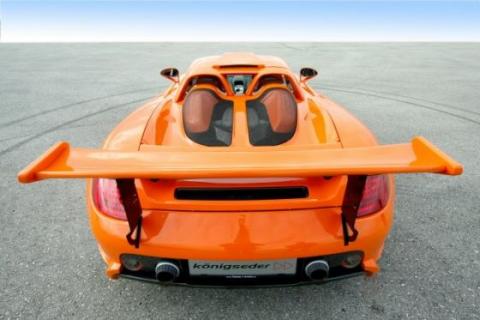
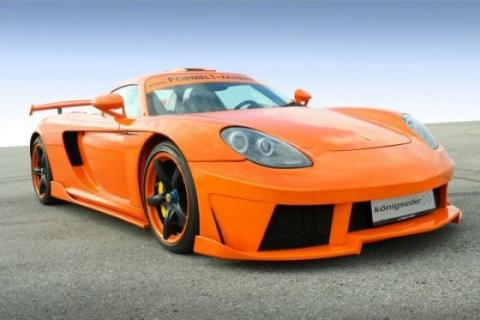
2009 Konigseder Porsche Carrera GT

2009 Konigseder Porsche Carrera GT Wallpaper2009 Konigseder Porsche Carrera GT Wallpaper

2009 Konigseder Porsche Carrera GT Front View2009 Konigseder Porsche Carrera GT Front View

2009 Konigseder Porsche Carrera GT Rear View2009 Konigseder Porsche Carrera GT Rear View

Friday, August 21, 2009

2009 porsche 911 carrera 2 tiptronic S

2009 porsche 911 carrera 2 tiptronic S Picture2009 porsche 911 carrera 2 tiptronic S Picture

2009 porsche 911 carrera 2 tiptronic S Interior2009 porsche 911 carrera 2 tiptronic S Interior

2009 porsche 911 carrera 2 tiptronic S Wallpaper2009 porsche 911 carrera 2 tiptronic S Wallpaper

Sunday, October 12, 2008

Tackling the Nurburging


It’s 7am on a crisp September morning and I’m about to catch a lift to Germany, because tomorrow I have an appointment with a Porsche 968 and one of the most famous stretches of tarmac on earth. My transport for today is a grey Seat Leon FR Tdi driven by Dan; an old friend and self-confessed speed freak. Beneath its standard exterior a Revo ECU remap and a few other choice tweaks lie in wait to silence the diesel critics.

With the roads mercifully clear of weekend-traffic we make good time down to the Channel Tunnel, where even the previous weekend’s fire fails to disrupt our progress significantly and we soon emerge into the sunlight at the other end. We head up onto the familiar tarmac of the A16 and, free of the British road system, the pace starts to rise rapidly. There’s a very marked improvement in observation and lane discipline on continental roads, which means speeds that would be reckless in Britain are comparatively relaxed. We cut across the flat plains of Northern Europe with the speedo rarely dropping below three figures. The Seat’s modified powerplant remains impressively civilised despite a GPS-recorded peak of 143mph and a cruising speed of around 120mph. Even driven with such enthusiasm it returns an indicated 31mpg.


As we head off the autobahn onto the B257, the landscape changes dramatically. Within a matter of miles it goes from wide-open farmland to the soaring foothills of the Eiffel Mountains. There’s also an increased feeling of Germanness. Steep roofs and gothic architecture start to lend the villages a Bavarian feel – none more so than our penultimate waypoint of Adenau – and yet it’s the road beyond here that really captures the petrolhead’s imagination. The L92 has a series of fast-flowing, well-sighted bends separated by alpine switchbacks. It’s almost hard to imagine a better driving road. A few miles ahead lies our hotel, The Altes Forsthaus. It was adopted as a local base for the Mercedes Benz racing team shortly after it opened in 1924. Since then, it’s seen the mammoth vintage SSKs, the breathtaking Silver Arrow grand prix cars and the graceful sports racers of the 1950s. And now… us.

Sometime before 6am the light is turned on and I find Dan standing by the switch already fully dressed. Like a kid at Christmas it turns out he’s been up for hours and got tired of waiting. And so, after hauling myself out of bed, we go out to check the oil in the Leon and then wander down to the circuit entrance. It’s barely dawn, but already a RUF 9ff and Nissan GT-R are burbling into the paddock. This just seems to typify the Nurburgring - a place that oozes petrol from every orifice.


After breakfast we head down to Haus Marvin – a small family run guesthouse, which just happens to own a fleet of high performance hire cars. My choice, the Porsche 968, looks pristine sat outside on the street and with a 10,000 Euro excess on the insurance policy I intend to keep it that way.

As we head back and queue to join the circuit, my pulse starts to quicken. I drive out as the barrier rises and almost immediately face the challenge of simultaneously trying to find my way round and keeping out the way of those who already have. My first impressions are that the circuit actually seems strangely unintimidating in real life. It’s much narrower and twistier than it appears on a computer screen, so driving a standard road car with some degree of self-preservation keeps the speeds reasonably sane in most places. Not that anyone seems to have told the supercar drivers that - various modified 911s buzz past, punctuated by the occasional BMW M5 or Weismann Roadster.

However, within a few laps it ceases to be a source of terror and just a point of mild annoyance. Normal autobahn rules apply and you’re obliged to pull over for faster traffic. Once you’ve slowed down to take a tighter line hugging the right hand curb this can easily spoil several corners. Even worse is overtaking slower traffic, where you have to go past on the left, which (on a clockwise circuit) is more often than not the outside. You also can’t take any of the risks you would do in competitive racing, so teetering around the dirty side of the track can be a nerve-wracking experience.

Fortunately the car isn’t a concern. It feels distinctly similar to my old Porsche 924S, with a few of the flaws ironed out. More to the point, the driving experience is nearly identical to the later 16-valve 944s. It leaves me even more baffled as to why 968 owners don’t just spend half the money on a good 944 S2. That’s not to say it’s a bad car. In fact it’s very good indeed. The free-spinning 3.0-litre four-cylinder engine, although barely powerful enough for a hot hatch by today’s standards, feels eager and responsive. The steering is direct and brilliantly precise with reasonable levels of feedback. Meanwhile the comparatively soft, but brilliantly damped suspension gives the 968 an almost supernatural ability to maintain complete composure; irrespective of what bumps, cambers or crests the Nordschleife chooses to throw at it.


When you do reach the limit it initially gives way to mild, well-telegraphed understeer. Push further and the 968 will tighten its line into a sort of four-wheel drift, but with ‘only’ 220hp combined with chunky aftermarket alloys and no limited-slip differential you can rarely provoke any serious oversteer. Which, on an unfamiliar track, suits me fine.

As the day progresses I start to gain a vague idea of where I’m going. I also start to notice a few stereotypes amongst my fellow ‘ringers. Most of the local drivers are humblingly competent – they hustle their BMWs and Porsches around at great speed and deal courteously with any traffic in front or behind them. But every so often you get one who appears to be out of control. They go past in a flurry of flailing hands and opposite lock, missing you by inches. Occasionally somebody gets it wrong in a big way and the traffic is either yellow flagged or stopped completely as the marshals scoop them up with typically Teutonic efficiency. On one such occasion I drive past a man who is walking away from the remains of his 997 GT3 RS. Going past slowly I can just make out the expression on his face – it’s exactly how I’d look too if I’d just written off a £100,000 supercar.

After this sobering experience I return to the paddock and let the 968 cool down while I ride shotgun with Dan. His Leon continues to impress out here on the track as it did on the autobahn. There’s somewhat more body roll than in the Porsche, but outright grip is very similar and the brakes are noticeably sharper. Even more impressive is the engine, which pulls like a train and responds with the sort of eagerness you wouldn’t usually associate with a diesel. It even sounds quite nice. Yet the soundtrack seems to be the last thing on Dan’s mind as he pilots the Leon with total commitment and considerable skill. I’m enjoying the roller coaster ride and waxing lyrical to this effect until politely reminded that it’s my job to keep quiet and hold the stopwatch. Dan, it seems, is on a mission.

At the end of the lap we head back to sit out another lengthy stoppage, at which point I spot an opportunity. As soon as the announcement comes over the tannoy that the track will soon be reopening I head towards the barrier. With the benefit of an empty road things finally start to come together. Apex follows apex and I feel at one with the 968. After around nine minutes I’m approaching the start line again, but, being on a roll, I decide to queue for the track side barrier instead of pulling into the pits. Once again someone else’s misfortune turns to my advantage. I’m a couple of cars away from the barrier as another stoppage is called and after fifteen minutes lounging in the late summer sunshine the session restarts in a carbon copy of the previous lap.


Immediately behind me a bright red 968 is joining the track and we set off down the straight. The other car seems to have somewhat more straight-line urge, so I pull over and signal to let him past. Going round the first set of real corners at the Hohenrain chicane I find myself catching up slightly. Building on my confidence from the previous lap I’m now able to judge the corner speeds better and the car is on its limit of adhesion virtually from the point I turn in.

Corner after corner, we concertina our way around the ‘Ring. A trio of bikes constitute just about the only traffic up ahead. Here, unlike a conventional road, the greater cornering speeds that cars can achieve hand them an advantage over all but the bravest of bikers. Conversely, the only people to catch us are a handful of the usual banzai 911s that blast past quickly, creating no real little distraction. It’s another perfect lap which sees our two 968s still separated by only a couple of hundred yards as it draws to a close.

Unfortunately my tank is virtually empty and my twelve lap ticket is about to expire, so I peel off towards the paddock. The other driver, meanwhile, gives a friendly wave and continues on to the track side barrier. I can’t deny I’m slightly jealous, but the day is rapidly drawing to a close, I’m completely knackered and the 15 year old Porsche is also starting to feel like it could do with a rest. It has, however, proved the ideal tool for learning the ‘Ring and it is with slight regret that I give the 968 back to its owners at Haus Marvin. I would highly recommend either to anyone contemplating a similar trip.


The journey home the following morning begins well with an enthusiastic crossing of the German B-roads in Dan’s Leon. However, as we join the autobahn the traffic thickens and it’s a trend that continues through into Holland and Belgium until we eventually grind to a halt on the Brussels Ring Road. In total, the journey back takes nearly three hours longer than the outbound trip. We’re not complaining though – it’s more than worth it for those fifteen miles of tarmac in the Eiffel mountains and one thing’s for sure – we’ll be back.

Tuesday, April 15, 2008

My Cars: Porsche 924S

The classic front engined, rear wheel drive GT has to be one of the most evocative profiles in motoring. It conjures up images of playboys in continent-crushing Aston Martins and Ferraris howling around alpine passes to the sound of Matt Monroe. It's all so exotic and unobtainable. Or is it?


Whilst I had my 205 GTi up for sale, I began considering a replacement. I wanted an affordable sports car that would not only introduce me to rear wheel drive, but also serve as a genuinely realistic mode of every day transport. I considered various options, but in the end I homed in on either the Porsche 924 or 944. I eventually choose the 924S, which technically speaking is an amalgamation of the two - arguably containing the best bits of both.

Porsche designed the original 924 for Audi using various bits from the VAG parts bin including the two-litre, four-cylinder engine used in the Audi 100 and the Volkswagen LT van. When Audi backed out of the deal, Porsche bought the rights to the project for £40million – a cool £6million less than they'd charged in development costs. Upon its release, the car met with a lukewarm reaction. Porsche enthusiasts took a dislike to the use of a water-cooled engine – in particular its location at the front of the car and modest 125hp output. However there was no denying that the company was onto something with the beautifully balanced transaxle layout and pretty, yet practical, body. Its eventual successor, the 944, was released six years later with a 2.5 litre, 165hp engine developed in-house from the 928's V8. It featured an all-new body shell along with a whole raft of improvements to the suspension, transmission and brakes. Curiosity rapidly got the better of the Porsche engineers, who began experimenting with the improved mechanics of the 944 in the lighter, slipperier shell of the 924.
The result was the 924S and initially it seems to have worked a little too well – the cars were noticeably quicker than the base model 944 and production models were fitted with low compression pistons to reduce their power output. Even so, 0-60 took around 8 seconds and the top speed was in excess of 130mph. It wasn't until the final year of production – with the eight valve 944 safely out of the way – that the full specification engine was put in. There was little doubt that the performance of the 924S eclipsed that of the 944, however to this day the stigma of the original 'van-engined' car remains and the prices have never really recovered. This is, however, great news for the budget-conscious buyer, which is exactly where I fit in… In April 2006 I part exchanged my troublesome Pug for a 1988 924S, costing a grand total of £1,900.


The first thing that struck me coming from a hot hatch is how differently the performance was delivered. The 924S' long gearing and low coefficient of drag ensured it could hold its own on the autobahn, but it lacked the initial punch of something like the Pug. Once on the fly, the smooth, torquey engine delivered impressive real world pace, even if its reluctance to rev sometimes felt like someone had set the red line too low.

The car's real trump card was its balance. Thanks to the rear mounted transaxle it had a near-perfect 50:50 weight distribution, the benefits of which rapidly became clear. When provoked, the tail end would break away slowly and progressively. Correcting the slide was an equally relaxed affair; the beautifully direct steering allowed you to respond with precision, while the forgiving chassis meant you didn’t strictly need to. Sadly the feel was never quite there to back up the steering poise and a floaty ride further reduced the confidence that the excellent chassis would otherwise have generated. The brakes were also a little inert, with neither the stopping power nor the modulation that you might expect. These three points may well have related to the mechanical condition and tyre choice of my particular example; whatever the reason it seemed unfortunate that they were allowed to spoil such a competent chassis.

The story was much the same with other areas of the car. With the rear seats folded it had a truly huge loading area, which the hatchback allowed you to make maximum use of. Two mountain bike frames in the back? No problem, try that in an MX5… However actually accommodating adults in the back was almost impossible without some form of amputation. Likewise, its high gearing, torquey engine and respectable fuel consumption theoretically made it an ideal long distance tourer, but in reality its pint-sized fuel tank required repeated stops. Everywhere you looked, the 924S was full of contradictions.


All of these things led to a car that was frustrating, not for its shortcomings, but because it so obviously had the potential to be truly great. Its fundamental spec was a relatively compact, two plus two, rear wheel drive sports car with sublime balance, hugely practical boot space, cheap running costs and impressive reliability. What more could you need? It even had a removable targa panel in the roof, which made a surprisingly close approximation to open air motoring. The only things the fundamental concept lacked were a bit more power and some beefier brakes. I was sorely tempted to take the car on as a project and address those, but there was one problem, or rather there was already a solution…

For the cost of modifying a 924S to my requirements, there was already a car that fulfilled them all; the 944 S2. This used a version of the 944 engine that had been fitted with a sixteen valve head and bored out to three litres; it revved far more freely than the original unit and gained no less than 50hp. It also featured up-rated ventilated discs all round combined with an ABS system, the larger 944 fuel tank and the options of stiffer suspension and a limited slip diff.

So, why didn’t I buy a 944 S2? Well, simply the cost. It may have been more economical than modifying the existing car, but a decent example would still have been two or three times the price. And that's not really what the 924S was about – while they do have their foibles, they also offer a huge amount of car for the money and a very affordable entry into the sports car market. My example may be long gone, but I do sometimes find myself considering a return to Porsche ownership. If I did it would undoubtedly be a 944 S2, but this isn't due to hindsight – it's simply a result of having the means this time round. For the money, nothing beats the 924S.